Date: July 5, 2026
Organizer: Women's Justice Movement (WJM)
Platform: Live on Instagram (@wjmglobal)
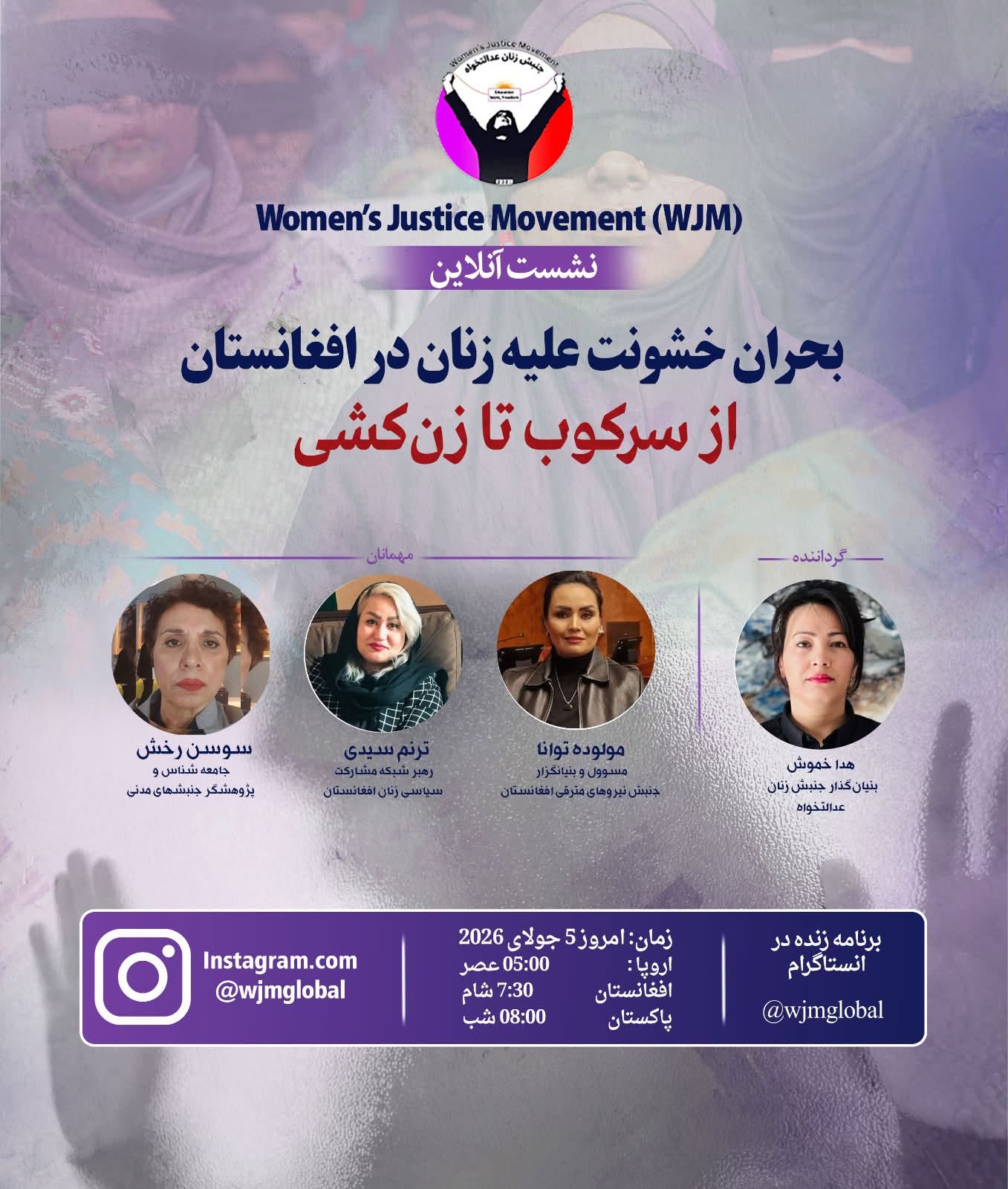
As part of its ongoing advocacy for the rights of Afghan women and its efforts to document gender-based human rights violations, the Women's Justice Movement (WJM) organized an online panel discussion titled "The Crisis of Violence Against Women in Afghanistan: From Systematic Repression to Femicide" on July 5, 2026.
The event brought together prominent women's rights defenders, civil society leaders, and researchers to examine the alarming escalation of violence against women and girls under Taliban rule. Participants discussed the systematic dismantling of women's rights, the rise in gender-based violence, and the urgent need for stronger national and international advocacy.
A Deepening Human Rights Crisis
Speakers emphasized that Afghan women are living through one of the darkest periods in the country's modern history. Since the Taliban's return to power, women have been subjected to institutionalized discrimination, exclusion from education and employment, severe restrictions on freedom of movement, arbitrary detention, intimidation, and widespread gender-based violence.
The panel highlighted that the crisis extends beyond individual acts of abuse. It reflects a system of gender apartheid in which women are deliberately excluded from public life and deprived of their fundamental human rights. This environment of impunity has also contributed to an increase in domestic violence, forced marriages, suicides, honor killings, and femicide.
Distinguished Speakers
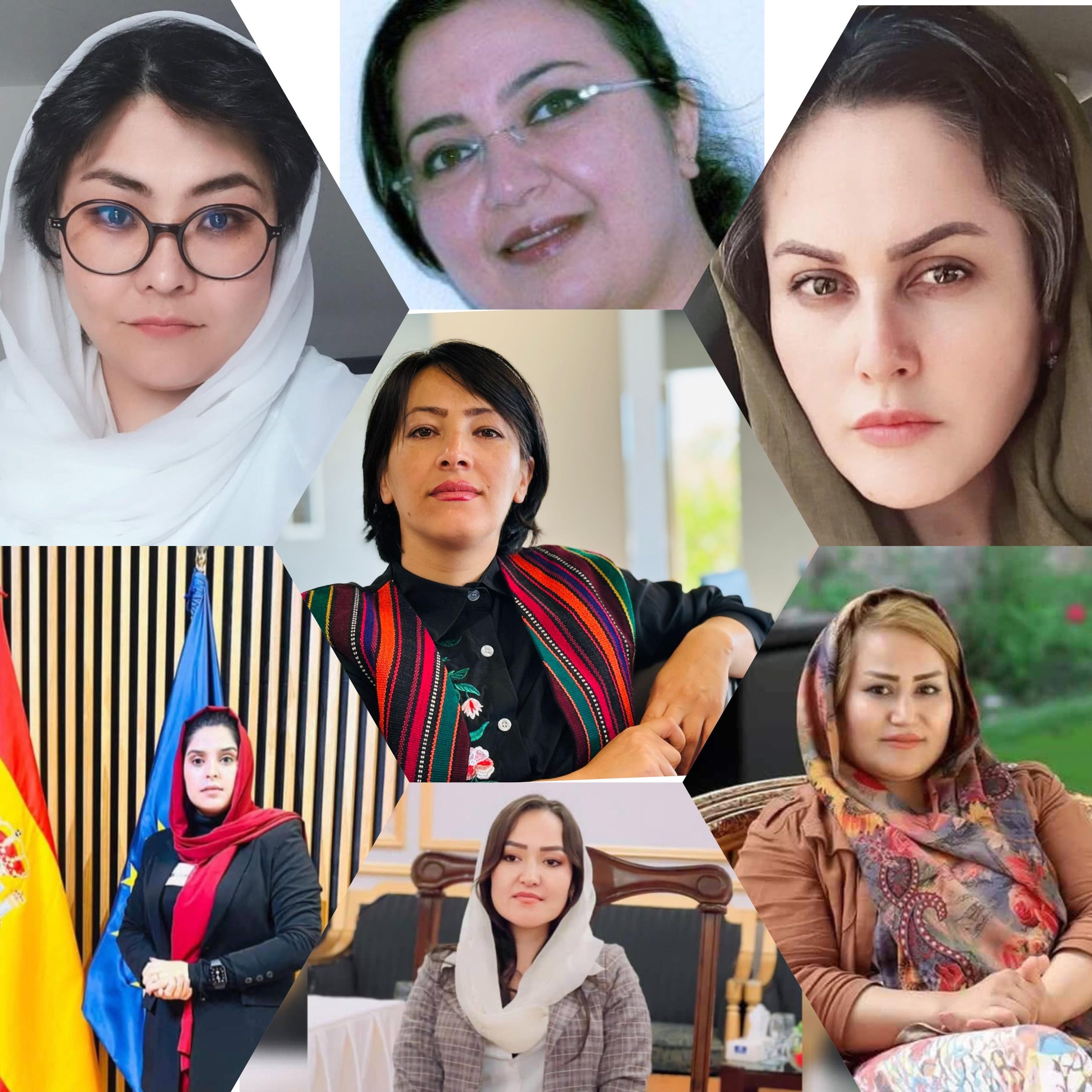
Sousan Rakhsh
University Professor and Researcher on Civil Society Movements
Ms. Rakhsh explored the historical and social roots of violence against women in Afghanistan, explaining that the Taliban's policies have not only stripped women of their legal rights but have also intensified violence within families and communities. She noted that the closure of women's protection institutions and the collapse of independent judicial mechanisms have left survivors of violence without access to justice or support.
Tarannom Seyedi
Leader of the Afghan Women's Political Participation Network
Ms. Seyedi criticized the international community's growing silence regarding the situation of Afghan women. She warned that any normalization of relations with the Taliban without meaningful human rights conditions risks legitimizing systematic gender oppression.
She stressed the importance of documenting human rights violations, protecting women activists, and pursuing international accountability for crimes committed against women.
Mowloda Tavana
Founder and Head of the Progressive Forces Movement of Afghanistan
Ms. Tavana described the current situation as a comprehensive campaign to erase women from Afghanistan's social, political, economic, and cultural life.
She argued that violence against women is not limited to physical abuse or murder; denying women access to education, employment, political participation, healthcare, and freedom of movement also constitutes structural violence and systematic discrimination.
Hoda Khamosh
Founder of the Women's Justice Movement
Moderating the discussion, Ms. Khamosh addressed the alarming increase in suicides, femicide, arbitrary arrests, enforced disappearances, and the continued persecution of women activists.
She emphasized that the suffering of Afghan women must not become a forgotten crisis and reaffirmed that Afghan women will continue their struggle for freedom, justice, equality, and dignity despite ongoing repression.
Key Issues Discussed
The discussion focused on several urgent topics, including:
* The sharp increase in gender-based violence since the Taliban's return to power.
* The relationship between gender apartheid and violence against women.
* Femicide and honor killings amid widespread impunity.
* Suicide and self-immolation as tragic consequences of systematic oppression.
* The dismantling of institutions that previously protected women and survivors of violence.
* The international community's responsibility to prevent the normalization of Taliban rule.
* The importance of documenting crimes against women for future accountability.
* Strengthening global advocacy networks to support Afghan women both inside the country and in exile.
Conclusions and Recommendations
Participants agreed that the current crisis is not merely a collection of isolated incidents but the direct result of institutionalized misogyny and systematic gender persecution under Taliban rule. They warned that continued international inaction risks further entrenching impunity and deepening the humanitarian and human rights crisis facing Afghan women.
The panel called on the **United Nations**, governments, international human rights organizations, and the global community to take concrete measures to:
* Recognize and address gender apartheid as a crime under international law.
* Increase protection for Afghan women human rights defenders and journalists.
* Support independent documentation of human rights violations.
* Ensure accountability for perpetrators of gender-based crimes.
* Reject any political engagement with the Taliban that ignores the rights and freedoms of Afghan women.
Continuing the Struggle for Justice
Concluding the event, the Women's Justice Movement (WJM) reaffirmed its commitment to amplifying the voices of Afghan women and ensuring that their struggle for justice remains visible on the international agenda.
The discussion served as another important platform for solidarity, documentation, and advocacy, reinforcing the message that the voices of Afghan women cannot and will not be silenced. Through continued dialogue, international cooperation, and persistent advocacy, WJM remains committed to advancing justice, equality, and human rights for all women in Afghanistan.
Share: