Maryam Wafa: From Pursuit to Exile A Trans Woman’s Flight Across Borders and Into Uncertainty
“Maryam Wafa” is not her real name. It has been changed to protect her life. Today she lives in Pakistan, but reaching even this fragile safety took three perilous attempts, years of fear, and a journey defined by violence, rejection and raw survival.
Before the Taliban returned to power in August 2021, Maryam’s life in Kabul was already shadowed by stigma. As a trans woman, she endured daily insults, ridicule and social exclusion. After the takeover, those familiar humiliations rapidly escalated into mortal danger.
“It stopped being just words,” she says. “It became threats.”
Maryam recounts how men she believes were linked to the Taliban began targeting her because of her appearance and gender expression. She was followed, interrogated and repeatedly ordered to “disappear.” Fearing for her life, she moved from one hiding place to another across Kabul, severing ties with most of her social circle.
“Eventually, hiding was no longer enough,” she says. “I knew they would find me.”
In 2023, Maryam decided to flee Afghanistan. Her first attempt to cross into Pakistan failed. So did the second. Each time she was forced to return to Kabul, more exposed and more terrified than before.
“Every return felt like walking back into a place where I might not survive another day,” she recalls.
On her third attempt she succeeded crossing through irregular mountain routes with the help of smugglers, navigating checkpoints and living with the constant risk of discovery. Yet arrival in Pakistan did not bring the safety she had risked everything to find.
It marked the beginning of a new and different uncertainty.
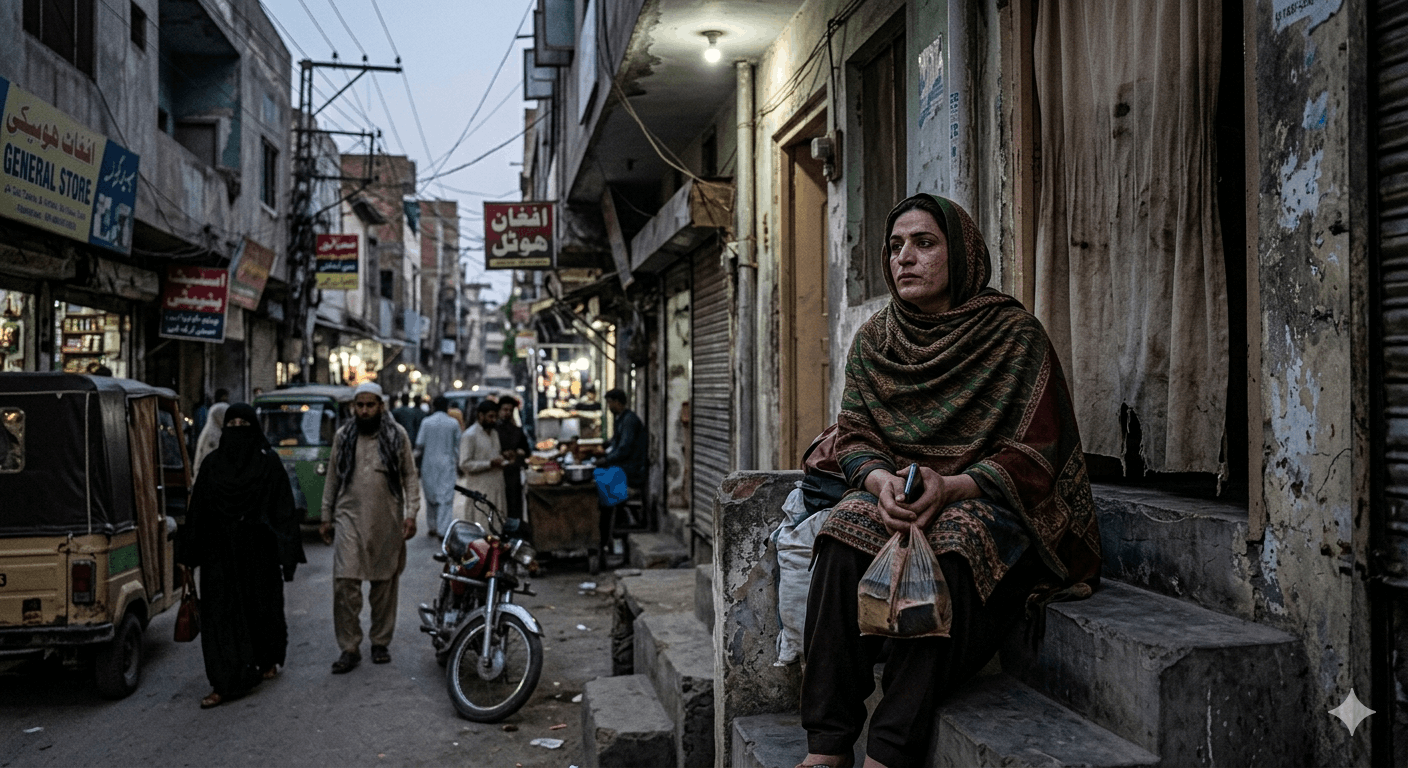
Maryam now lives in Pakistan without secure legal status. Like thousands of other Afghan refugees, she faces the ever-present threat of detention and deportation. “I am still not safe,” she says. “I am always afraid they might send me back.”
Her challenges go far beyond legal limbo. Without valid documents, she has almost no access to healthcare, employment or basic services. The same gender identity that made her a target in Afghanistan continues to expose her to discrimination and social exclusion in Pakistan.
“I thought that if I could just leave Afghanistan, I would finally be able to breathe,” she says. “But here, I am still only surviving not living.”
Maryam has repeatedly contacted international organisations seeking protection or resettlement. So far, her appeals have received no clear pathway forward. Responses, when they arrive, typically cite limited resources and competing priorities.
Her story reflects a wider, often overlooked pattern among Afghan refugees especially those from marginalised communities. While international attention has focused on large-scale displacement, the specific vulnerabilities of LGBTQ+ individuals frequently remain at the margins of protection systems.
Maryam describes her life as “stuck between borders” unable to return home, yet unable to move forward.
“I don’t want to be invisible anymore,” she says. “I just want a place where I can exist without fear.”
Her experience is not unique. It illustrates the layered dangers faced by transgender people fleeing persecution: crossing a border does not always mean reaching safety, and survival often depends on navigating systems that are not designed to protect them.
Share: