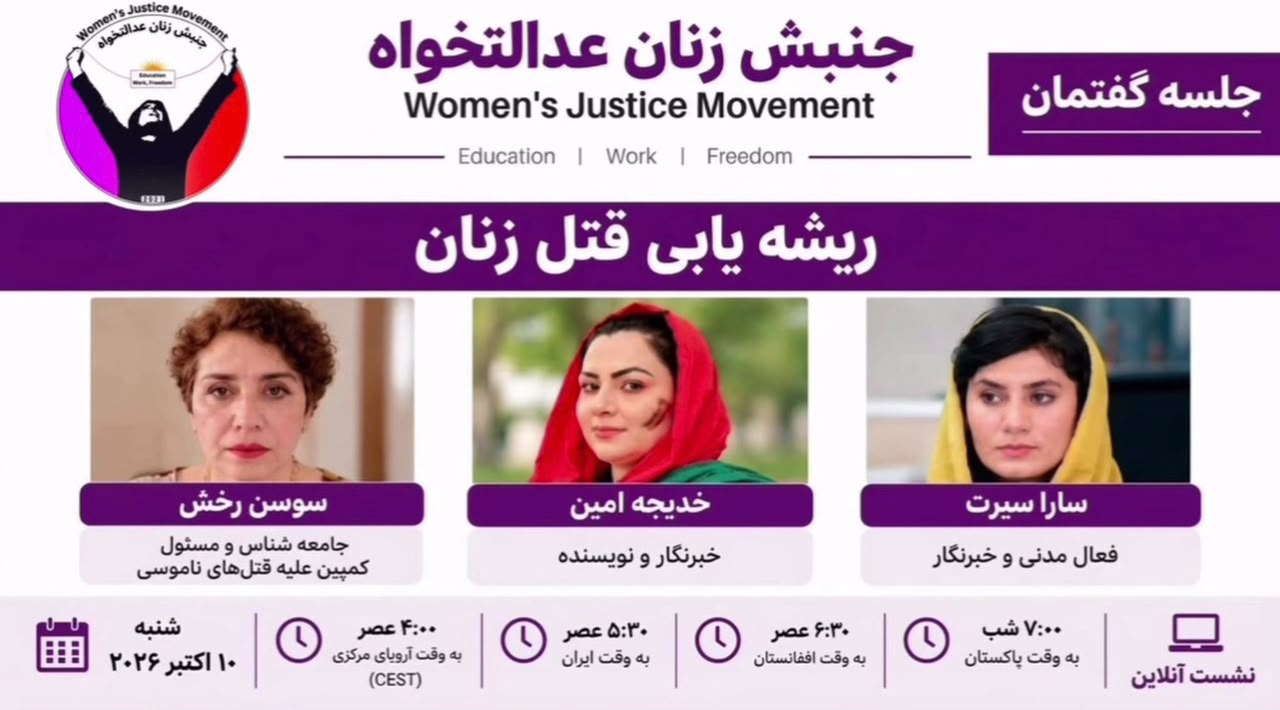
The Women’s Justice Movement (WJM) held its fourth online dialogue session on October 10, 2026, bringing together 41 participants to examine the root causes of femicide and so-called “honour killings,” and the social structures that allow violence against women to persist.
The session explored how patriarchal power structures, family and social pressures, discriminatory cultural norms, and media practices can contribute to violence against women or prevent survivors from seeking help. It also highlighted the importance of access to information, responsible reporting, and collective efforts to challenge gender-based violence.
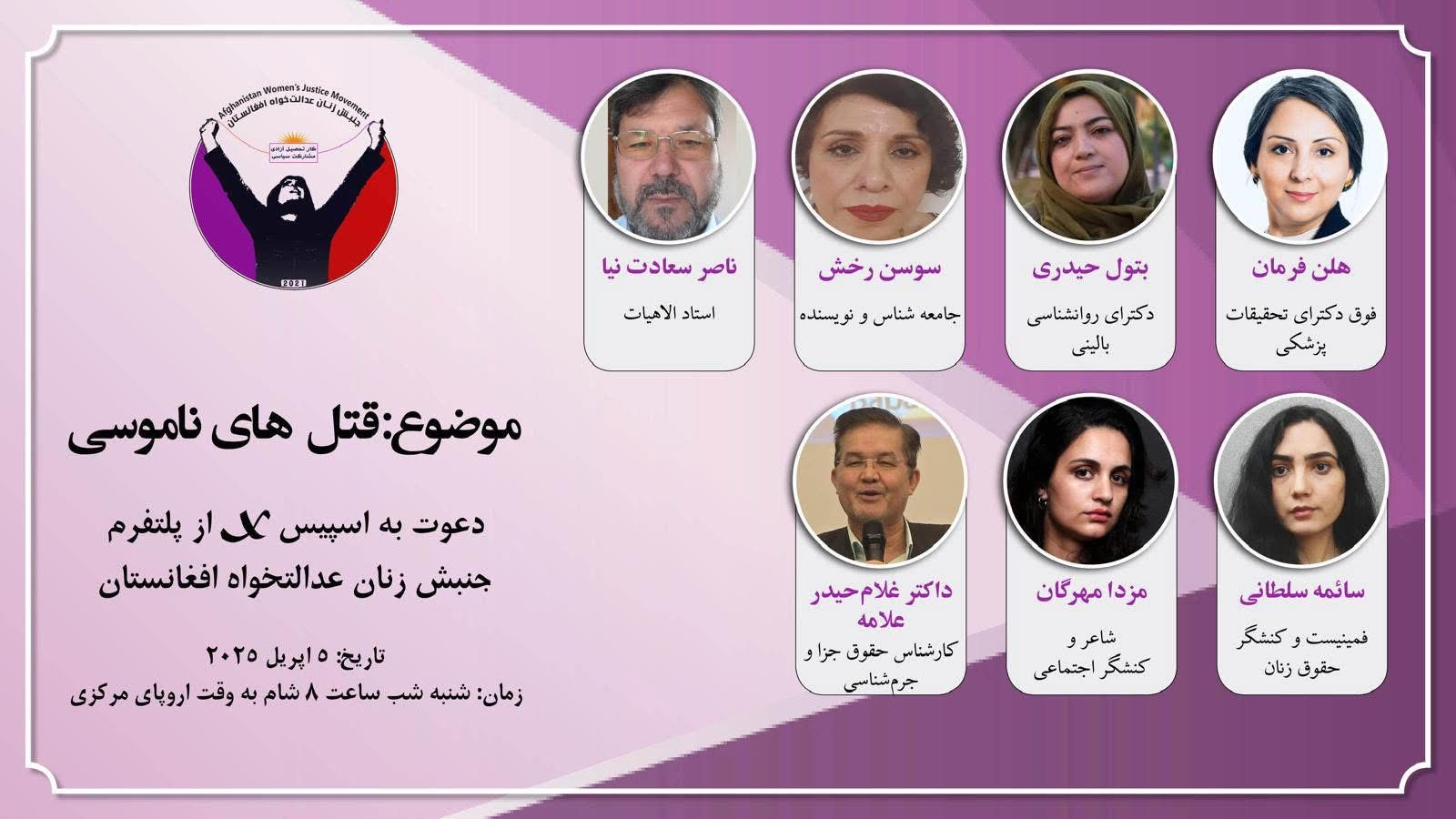
The discussion featured three speakers: Susan Rakhsh, a sociologist and member of a campaign against so-called honour killings; Sara Sairat, a civil society activist and journalist; and Khadija Mari Amin, a journalist and writer. Zolqia Zarifi and Shabana Shabdeez moderated the session.
Speakers Examine the Social Roots of Violence Against Women
The speakers discussed how patriarchal structures and unequal power relations can restrict women’s freedom and reinforce the belief that women should remain under male control. Such attitudes can contribute to the normalisation of violence and the continuation of practices that violate women’s rights and dignity.
The discussion also examined the pressures women may face within their families and communities, including discrimination, coercive control, humiliation, victim-blaming, and fear of social stigma. These pressures can increase women’s vulnerability and make it more difficult for them to speak out or seek assistance.
Participants highlighted the need to break the silence surrounding femicide and other forms of gender-based violence. The discussion stressed that women should be able to share their experiences without fear of further harm and that cases must be documented responsibly, with attention to survivors’ safety and dignity.
Responsible Media and Access to Information Are Essential
The role of the media was another central theme. Speakers discussed how accurate, ethical, and evidence-based reporting can challenge the normalisation of violence, raise public awareness, and help counter discriminatory attitudes. They also emphasised the importance of avoiding victim-blaming and ensuring that coverage does not reinforce the stigma faced by women experiencing violence.
WJM said the programme aimed to expand women’s access to knowledge about gender-based violence, its underlying causes, and the social attitudes that allow it to continue. Access to reliable information can help women recognise violence, understand their rights, assess risks, make informed decisions, and identify possible sources of support when facing difficult or dangerous circumstances.
The session also sought to encourage public dialogue, challenge discriminatory norms, promote solidarity, and strengthen collective efforts to prevent violence against women.
WJM Calls for Greater Awareness, Support and Collective Action
The participation of 41 individuals provided an opportunity to raise awareness and encourage discussion about the causes and consequences of violence against women. The session reinforced the importance of expanding access to information about women’s rights, helping women identify possible avenues of support during crises, challenging discriminatory beliefs and practices, and promoting responsible media coverage and accurate documentation.
The discussion further highlighted the need to strengthen solidarity with women experiencing violence and improve public understanding of the social conditions that allow such abuse to continue.
While a single dialogue session cannot address all the structural causes of gender-based violence, sustained awareness-raising and accessible information can contribute to prevention efforts and help create conditions in which women are better equipped to recognise risks and seek support.
The Women’s Justice Movement remains committed to ending violence against women, advancing gender justice, and expanding women’s access to knowledge, awareness, and support. Through its dialogue sessions and advocacy initiatives, WJM seeks to create spaces for discussion, strengthen public understanding of gender-based violence, and encourage collective responsibility for protecting women’s rights and dignity.
WJM also welcomes engagement and collaboration with international organisations, human rights institutions, civil society networks, and other partners working to prevent gender-based violence, strengthen protection mechanisms, and advance women’s rights.
Every woman has the right to live free from violence, make her own choices, and access information and support without fear.
Share: